AI Web Regression Testing Tools: mabl vs Testim for CI
Choose by the assertions you can trust, the evidence you get when a run fails, and the cost of repeating your suite—not just how quickly AI creates a test.
AI Tool Finder Editorial Team · Sources checked October 15, 2026
Shortlist mabl for a managed testing workflow where you can separate quick CI checks from richer cloud regression runs. Shortlist Testim for visual test authoring with custom validation hooks. Require both to catch a deliberately broken login, search or form outcome before buying. Neither is a measured winner here.
Evidence boundary: Official documentation review only. We have not run mabl or Testim, measured flakiness, verified a paid account or obtained a quote. Screenshots below show official documentation, not our test executions.
Buy a repeatable check, not just a browser action
A regression test should identify the application version, establish test data, perform an action, assert the expected outcome and preserve enough evidence to explain a failure. A browser agent completing a task is useful, but that alone does not show whether yesterday’s expected behavior still holds.
You need this guide when…
You own recurring Web checks, want them tied to a release or pull request, and have someone responsible for reviewing assertions and failures.
Use the adjacent guide when…
You need browser task automation, pull-request review or coding assistance. Those solve different parts of delivery.
Selection method: two documented commercial Web testing workflows, chosen for this purchase decision. This is not an exhaustive market ranking, a native-mobile comparison or a recommendation to replace an existing test suite.
Pricing: compare the billable run, then ask for a quote
Both public pricing routes are quote-based. We do not have a verified dollar comparison. Ask each vendor to price the same tests, execution locations, browser matrix and retention requirements.
On a phone, swipe the table horizontally to reach the official pricing links.
| Tool / editorial fit | Published price | Usage unit to inspect | Ask before signing | Official next step |
|---|---|---|---|---|
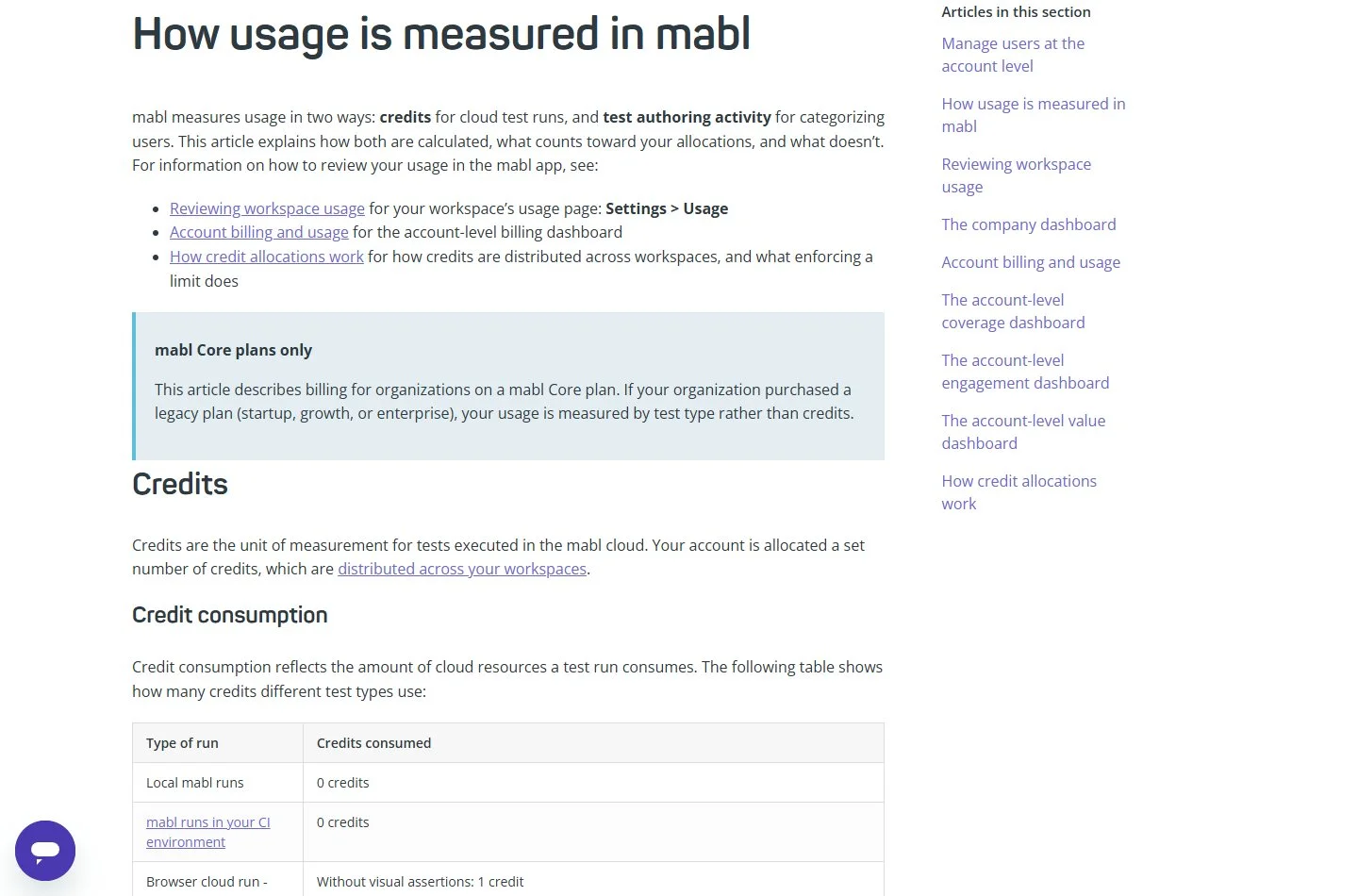
| mabl Cloud regression plus targeted CI checks | Custom quote; no public dollar rate verified. Official pricing | Core browser cloud run: 1 credit without visual assertions; 1.5 with them. Core usage rules | Core vs legacy plan; annual allocation; concurrency; artifact retention | mabl pricing → |
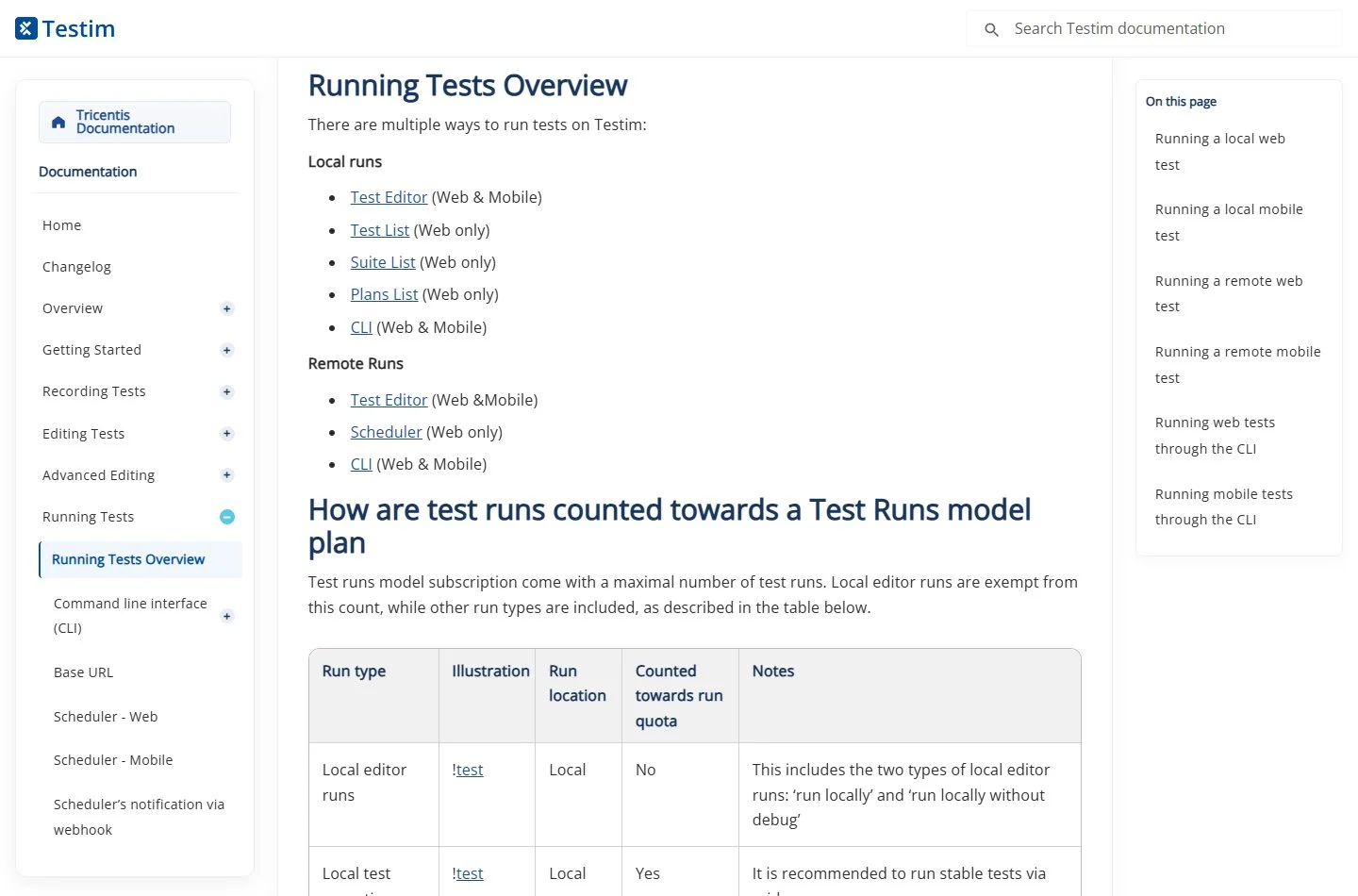
| Testim Visual authoring plus custom validations | Custom quote; no public dollar rate verified. Official pricing | Test-runs model: local editor runs are exempt; local CI, grid and scheduled runs count. Run-count rules | Run quota; retries; grid capacity; seats; artifact retention | Testim pricing → |
Confirm the allocation period in writing: mabl’s pricing FAQ describes a monthly starting allowance, while its Core usage article describes annual credit allocation. We have not reconciled those statements with an actual contract. Pricing FAQ · Core billing period
An allowance, a concurrency limit and a dollar price are different numbers. We have not verified minimum spend, overage rates, trial entitlements or your negotiated limits.
mabl: decide what must run in the cloud
Why shortlist it: A team can evaluate a split workflow: quick targeted checks in its CI environment, with deeper diagnostic coverage in the cloud. The operational trade-off matters as much as the credit rate.
For mabl tests, local and CI Runner execution is sequential and Chrome-only; the execution comparison lists pass/fail output rather than cloud-style artifacts. Cloud runs provide screenshots, logs and fuller reporting. Execution environments
mabl lists GitHub, GitLab and other CI/CD integrations that trigger deployment events. A deployment event selects matching plans; this is separate from running tests inside your own CI container. CI/CD integrations
The assertion review still belongs to your team
mabl documents that a passing run saves an auto-heal, while a failing run does not. Assertions help check that the replacement element is the intended one, and auto-healing can be disabled on an assertion. Assertions and auto-heal
Our acceptance criterion: changing a button’s styling should not change the required outcome. If the wrong user is logged in or a record was not saved, the test must fail even if every click found an element.
Pause the purchase if: your proposal assumes that zero-credit CI runs include the same evidence or browser coverage as cloud runs. Ask for an example failure report from the exact mode you plan to buy.
Testim: validate the outcome and count the executions
Why shortlist it: Evaluate it when testers want to maintain visible test steps while engineers need a route for application-specific checks. Budget for the runs used to keep that suite reliable, not just the number of saved tests.
Testim’s failure guide describes failed-step errors, screenshot comparison, the failed DOM snapshot, and console and network logs for diagnosis. Failure investigation
Testim provides a CLI command generator for CI integration and documents Testim Cloud Grid, local Selenium-compatible grids and third-party grids. Execution routes
Our acceptance criterion: record the same flow, add an explicit business assertion, and deliberately corrupt its expected result. Inspect whether a failure points to the broken outcome and whether a reviewer can reconstruct it.
Pause the purchase if: the proposal treats all local runs as unmetered, or leaves grid costs and run-quota treatment unexplained.
Budget example: 100 tests become 11,000 executions
This is a planning example, not usage observed on either product. Assume one browser, one dataset per test and no retries. A second browser doubles the planned executions to 22,000. Three datasets instead of one triples them to 33,000. Combining both gives 66,000, before retries.
If all 11,000 executions are mabl Core browser cloud runs, the documented rates imply 11,000 credits without visual assertions or 16,500 with them. This is an editorial calculation, not a quote or an observed bill. Rates used
Core usage documentation assigns zero cloud credits to local mabl runs and mabl runs in your CI environment. That does not remove subscription or infrastructure costs; local Playwright visual assertions have separate metering. Usage scope
In Testim’s test-runs model, local test-list, suite, plan and CLI/CI executions count toward the quota. The exemption is specifically local editor runs. Local-run distinctions
Send the same worksheet to both vendors
- Execution mix: tests × triggers × browser/device variants × data variants; separate editor, CI and cloud runs.
- Retries: ask how failed, cancelled, timed-out and retried attempts affect the quota. Do not budget every failure as a free rerun.
- Capacity: state the finish-time target and ask for effective concurrency, queue behavior and grid charges.
- People and evidence: ask about author seats, support, artifact retention and export access; keep your CI infrastructure costs separate.
- Commercial terms: require the plan name, allowance period, overage or stop behavior, and renewal terms in the quote.
We have not verified either vendor’s retry billing, your effective concurrency or retention entitlement. Treat those as quote questions, not included features.
A three-flow acceptance plan you can reuse
Proposed plan — not executed. Use a disposable demo application, synthetic users and seeded data. Run both vendors against the same pinned app version and expected outcomes. Do not use real customer records or a live payment flow.
Swipe to read the required failure evidence.
| Flow | Explicit assertion | Deliberate regression | Evidence to inspect |
|---|---|---|---|
| Login | Correct synthetic user identity and access state after login | Return the wrong identity or keep the session unauthenticated | Failing assertion, observed identity, app version and failed step |
| Search | Expected seeded item and identifier; unrelated item excluded | Return a plausible but wrong item | Expected vs actual result, screenshot or diagnostic output, test data |
| Form submission | One saved synthetic record with the exact expected fields | Show success without saving, or save duplicate records | Verification of saved data, failed assertion and network evidence if available |
- Establish a baseline. Freeze test data, browser settings and expected values. Repeat the unchanged baseline five times as a small proposed screening exercise; this does not establish long-term reliability.
- Separate harmless changes from broken behavior. First alter a CSS class or label while preserving the intended outcome. Then introduce one of the functional regressions above. Review every suggested locator or assertion change.
- Test the CI gate. Trigger the suite on the broken version. Confirm that the required CI check fails and a reviewer can open the result. Do not count “the job started” as successful integration.
- Reconcile the billable work. Record each attempt, retry, browser and dataset variant. Compare that ledger with the vendor usage screen and the quote’s units.
- Make a bounded decision. Record misses, unexplained failures, repair effort and evidence gaps. Reject the configuration if a deliberately broken business outcome passes; investigate before attributing a failure to the product.
What remains unknown: detection quality on your application, ongoing maintenance effort, useful failure-report detail in your purchased mode, and the real cost of your suite. Documentation alone cannot settle these.
Questions before you buy
Which AI Web regression testing tool should I shortlist first?
Shortlist mabl if the cloud-versus-CI execution trade-off matches your team. Shortlist Testim if a visual editor with custom validation hooks suits your workflow. These are editorial fit judgments, not benchmark winners; use the acceptance plan in this guide before purchasing.
Does self-healing prove that a test is correct?
No. Finding an element and validating a business outcome are different jobs. Keep explicit assertions for the expected user, result or saved record, then deliberately break that outcome to check that the test fails.
Is local testing always outside the paid usage allowance?
No. “Local” describes where a run happens, not a universal billing rule. Use the plan-specific run-count and credit tables above, including the distinction between an editor run and a CI run.
Did AI Tool Finder run mabl or Testim for this guide?
No. We reviewed official public documentation and pricing pages on October 15, 2026. We did not execute vendor tests, measure reliability, obtain quotes or verify account entitlements. The acceptance checklist is a proposed test plan, not a test result.
Method, sources and disclosure
This guide compares documented Web regression workflows as of October 15, 2026. Official facts are linked next to the claim; suitability judgments, budget arithmetic and acceptance criteria are our editorial analysis. The two official-page screenshots document our source review. We did not create vendor accounts or run vendor tests for this article.
No sponsored position is included in this comparison. Product order does not imply a measured ranking. Our editorial policy explains evidence and commercial disclosures. Check current official terms and your written quote before purchasing.
Related: AI browser automation · AI code review · AI coding assistants