1. Supported operation available?
Evaluate the API or existing connector. Confirm the required fields, permissions and response.
Choose browser automation, app connectors or a hybrid process using concrete tasks, approval boundaries and completion evidence.
AI Tool Finder Editorial Team · Checked 22 September 2026
If a supported API or connector exposes the action and data you need, start there. Use a browser agent for a required step that exists only in the website interface. Combine them when the browser is needed for one part of a larger process. Keep the same approval and verification requirements whichever route you choose.
This is a workflow-design guide with illustrative scenarios, not a performance benchmark. Browser tools can also be driven by explicit scripts; an AI agent is useful where interpretation is needed, not automatically at every click.
Evaluate the API or existing connector. Confirm the required fields, permissions and response.
Evaluate a browser step on a site you are allowed to automate. Define its input and completion evidence.
Use a hybrid process. Pass a small, validated result between components and make failures visible.
Keep the step manual while testing. A workflow that stops clearly is preferable to an undetected wrong result.
| Question | API or connector workflow | Browser agent |
|---|---|---|
| What does it interact with? | Documented operations and structured fields | The rendered website and its controls |
| What can break? | Permissions, endpoint changes, rate limits, field mappings | Sessions, page changes, ambiguous controls, interrupted navigation |
| What proves a write? | Resulting record and identifier; not only request success | Receipt or resulting record; not only a click |
| How should you budget? | Platform usage, API charges and exception handling | Model, session and infrastructure usage plus exception handling |
| What needs review? | Consequential actions and uncertain outputs | The same, including the exact destination selected |
If the inbox and CRM have suitable connectors, keep the transfer structured. Let a model classify the message into allowed categories; route uncertain classifications to a person. Inspect the draft record before enabling automated writes. Opening a browser for this job adds little if the connector already supports the exact fields.
If there is no suitable download API, a browser may be needed to reach the document. Verify the supplier, invoice number and period before passing the file downstream. An API can then store the verified document. If authentication needs human intervention, make that an explicit paused state rather than calling the whole job complete.
A browser can collect options, while a structured workflow records the shortlist. Require approval of the exact merchant, item, quantity and total before purchase. An agent being technically capable of checkout does not establish permission to buy or guarantee that every retailer accepts it.
A hybrid process needs a small contract: the input identifier, the expected output fields, a status and evidence of the result. Keep prepared, approved, submitted and confirmed separate. Otherwise one component may treat a draft or a click as a finished transaction.
Before retrying a write, check whether it already succeeded. A lost response can leave the destination changed even though the initiating component reports failure. Reuse the destination record identifier or another appropriate duplicate check; do not assume starting the workflow again is harmless.
Also define who resolves failures. Store enough context to investigate without copying entire sensitive sessions into logs. Give the operator a clear way to pause the workflow and resume from a known step.
Do not invent a universal success rate from a few runs. Use the pilot to identify a poor fit and the operational work still required. A simpler existing rule or manual step can remain part of the final process.
 Compare browser automation tools
Our guide compares documented execution routes, not benchmark scores.
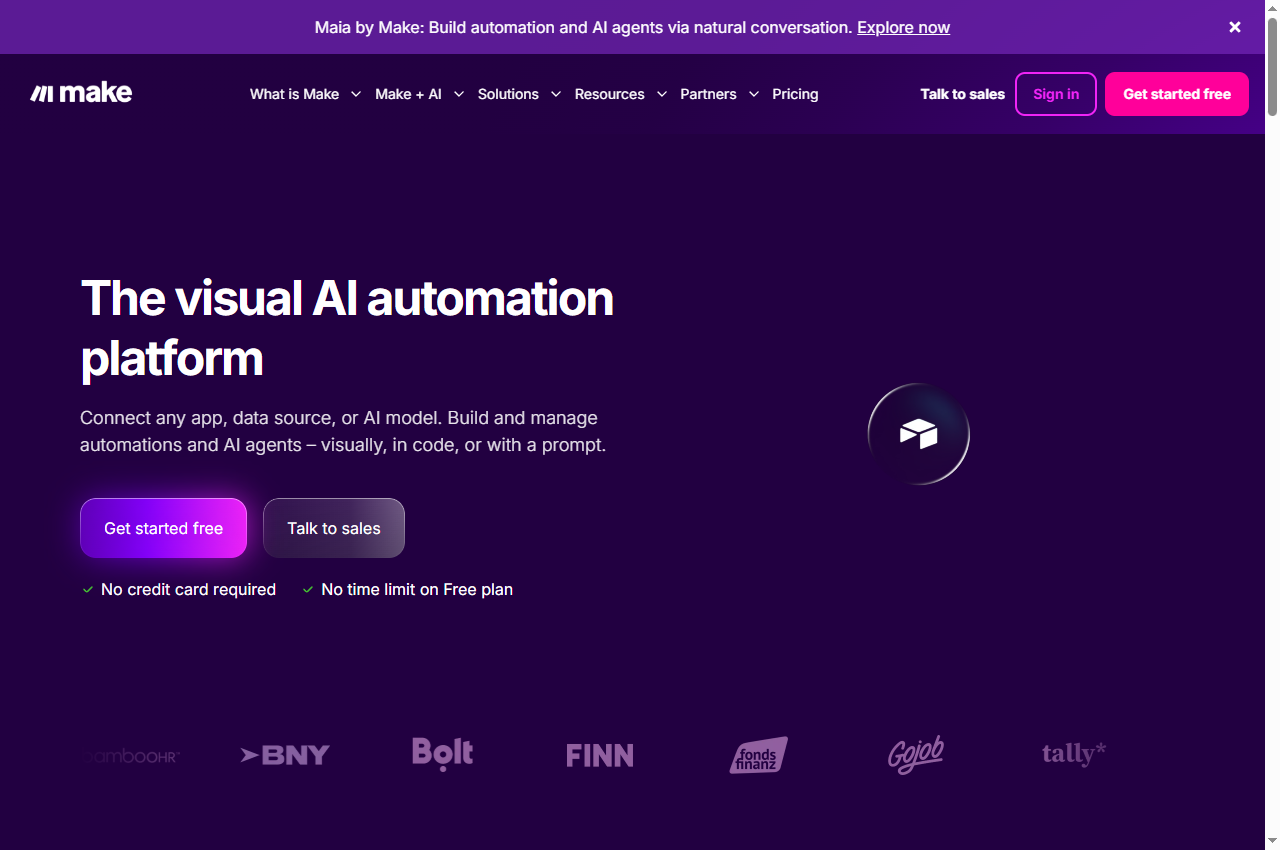 Compare AI workflow builders
Check connectors, billing units and who maintains each workflow.
Public vendor-page screenshots captured 22 September 2026, reused as navigation previews; not test evidence.
Technical examples: Stagehand documentation and n8n documentation. Agent harness guide.
Not universally. Start with a supported API or connector when it exposes the required operation. Use a browser step where the necessary action exists only in the website interface.
Yes. Define a small input and output contract, pass verified results between steps, and preserve clear failure and approval states.
No. Confirm the resulting record, receipt or downloaded artifact. The action that initiates a change and the evidence that it completed are different.
No. Keep explicit rules for predictable transfers and validations. Add model interpretation where the task actually needs it, and define how uncertain results reach a person.
Suggest a product and explain the workflow it supports. Editorial consideration is free and does not guarantee publication. Sponsored placements require an agreed scope and clear disclosure.
Submit a tool Placement options